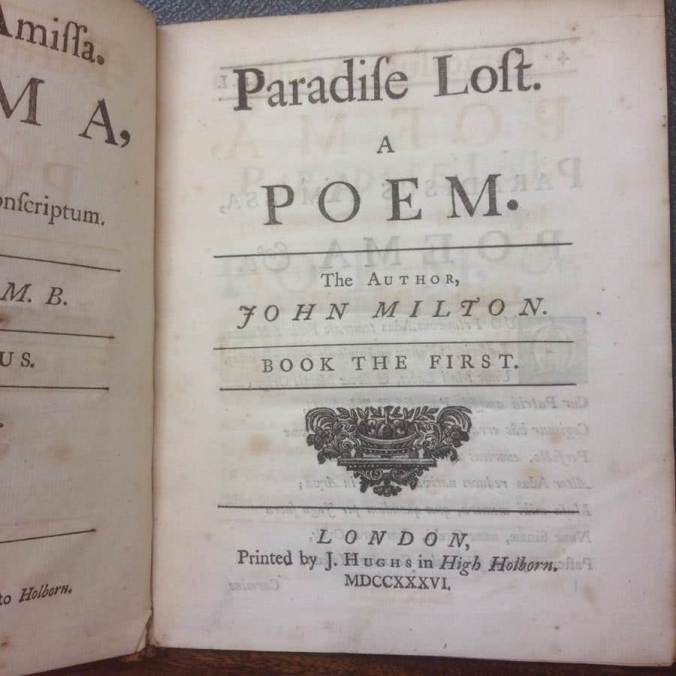
To continue where we left off in the last post on the reading of Charles Bridges Knight, I repeat here the introduction for the background:
The Reading with Austen website focuses on the contents of the Godmersham Park library as noted in the 1818 catalogue of the collection. We know that Jane Austen read and rested in this library because her letters tell us so, and the RwA website has brought this long-ago library back to colorful life. So it is so very interesting a treasure to stumble upon other mentions of this library. The scholar Hazel Jones [HJ]* has been very generous in sharing her research into the diaries of Austen’s nephew Charles Bridges Austen (later Knight), who also spent time in this very library. Ms. Jones is writing a book on Edward Austen Knight’s sons, and in reading (and transcribing) Charles Bridge’s diaries (which are housed at Jane Austen’s House Museum ), she finds numerous references to his titles he is reading in the library.
Charles Bridges was born March 11, 1803 at Godmersham Park in Kent, the 8th child of Jane Austen’s brother Edward Knight and Elizabeth Bridges. He was a commoner at Winchester* from 1816-1820, attended Trinity College, Cambridge and was ordained in 1828. He was the curate of West Worldham in Hampshire and rector of Chawton from 1837-1867. He died unmarried on October 13, 1867, aged 64 years. He is buried in the graveyard at the St. Nicholas Churchyard in Chawton (Section B: Row 2. 70 ).
****
Here are the books in the library that Charles mentions, continuing in his dairy marked number 2. As noted before, not all these books were in the 1818 catalogue, often being published after that date, and therefore not part of the RwA project. But I list them just the same, as it shows the continuing depth and use of the library in succeeding years, as well as Charles’s reading habits and often humorous commentary. We must also consider that Charles had his own copies of books and why they do not appear in either the 1818 or 1908 catalogues.
- Basil Hall. Travels in America, 1829, etc..
Tuesday March 6. … Read Captn Hall’s memoirs of his early life & thought it very entertaining & instructive. A very good present for a young mind or any youngster just beginning life. He says it is a difficult thing to write a good journal which is very true. People are too apt to write down mere matters of fact such as the height of a mountain the proportions of a temple the beauty of a climate, all which things remain the same, whilst they say nothing of their prevailing feelings and particular trains of thought & pursuit.’
Basil Hall has a few publications, all in the 1818 catalogue (though some are dated after 1818):
-

Hall. Travels – RwA
Travels in North America in the years 1827 and 1828. By Captain Basil Hall, Royal Navy. In three volumes. Second Edition. Edinburgh: 1830. In the Knight Collection
 Extracts from a journal, written on the coasts of Chili, Peru, and Mexico, in the years 1820, 1821, 1822. By Captain Basil Hall, Royal Navy, author of a voyage to Loo Choo. In two volumes. Printed for Archibald Constable and Co. Edinburgh; and Hurst, Robinson, and Co. London, 1824. In the Knight Collection
Saturday March 10. … Finish’d Hall’s fragments & like them much.’ – must refer to this:
- Fragments of Voyages and Travels, including anecdotes of a naval life: chiefly for the use of young persons. By Captain Basil Hall, R.N. F.R.S. In Three Volumes., Edinburgh; Whittaker, Treacher, & Co. London, 1831. A Lost Sheep!
- Fragments of Voyages and Travels. By Captain Basil Hall, R.N. F.R.S. Second Series. In Three Volumes. Robert Cadell, Edinburgh; Whittaker, Treacher, & Co. London, 1832. A Lost Sheep!

Basil Hall – wikipedia
A side note: Capt. Basil Hall was on the HMS Endymion, as was Jane Austen’s brother Charles Austen – one wonders if they were ever on the ship at the same time, as their dates do coincide! [I shall look into this further…]
*****
- Frances Milton Trollope, Domestic Manners of the Americans 1832.
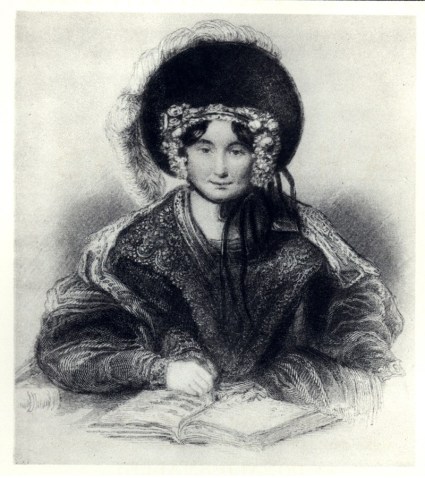
Frances Trollope
‘Saturday April 28. … George & I are anxious to go to America since reading Mrs Trollope & Capn Hall, but my father will not stand the money.’ (Ibid.)
Trollope’s very successful (and very controversial – she was not overly kind to the budding country, nor was Capt. Hall) Domestic Manners is not in the 1818 catalogue nor do I see it in the 1908 – the most interesting bit here is that Edward Austen would not send his son off to America… and also that the book was in the Godmersham library shortly after it was published in order for Charles to read it before his April 28 journal entry.
*****
‘Tuesday. July 10. … I have spent the time generally in reading making sermons till breakfast, and have been out mostly the rest of the day, but most times have sat & read in the library a little sometimes an hour or more before luncheon. My studies have been chiefly sermonizing, Hooker’s Ecclesiastical Polity book 5 about preaching, Chillingworth’s and a book about altering many things in the Church of England, written I think about 1740, or rather earlier; some parts seem good, but much carried too far.’
6. Hooker’s Ecclesiastical Polity:

The Works Of that Learned and Judicious Divine, Mr. Richard Hooker, in Eight Books of Ecclesiastical Polity, Compleated out of his own Manuscripts. Printed for Robert Scot, Thomas Basset, John Wright and Richard Chiswel, 1682. In the Knight Collection
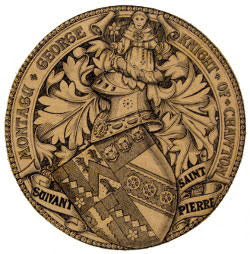
What is interesting in this copy is that the Montagu George Knight bookplate is the least commonly seen:
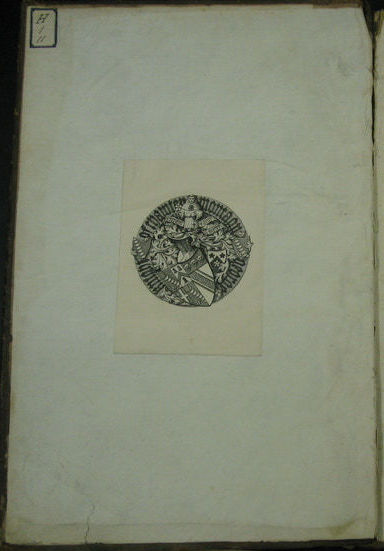
Hooker – MGK bookplate
a larger close-up view: this bookplate was the first one done by Charles Sherborn in 1900

7. Chillingworth, Richard: The Religion of Protestants (1674)

by; after Francis Kyte; Unknown artist. print,c1724 – wikipedia
The Religion of Protestants A Safeway to Salvation. Or, An Answer to a Book Entituled Mercy and Truth, or, Charity maintain’d by Catholiques: Which pretends to prove the Contrary. TO which is Added The Apostolical Institution of Episcopacy. As also, IX. Sermons, The First Preached before His Majesty King Charles the First, the other Eight upon special and eminent Occasions. By William Chillingworth Master of Arts of the University of Oxford. The Fourth Edition. Printed by Andrew Clark, for Richard Chiswell at the Rose and Crown in St. Paul’s Church-yard, 1674. In the Knight Collection
******
8. Ross Cox. Adventures on the Columbia River (1831)
‘Saturday (11 August omitted). Tired. I read on the library sofa Ross Con (?).’
and later on Monday August 13th Charles writes in the beginning of his Diary number 3:
‘Monday August 13th … read & finished Ross Cox’.
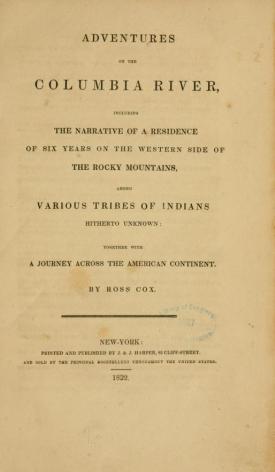 This title was initially indecipherable, but further sleuthing on Ms. Jones’s part tuned up a second reference to Ross Cox, so we know Charles was referring to Cox’s Adventures on the Columbia River (Henry Colburn & Richard Bentley, London, 1831).
According to Wikipedia, Cox’s Adventures is one of the most important documents relating to the later history of the North West Company. Several geographic features in Canada, including Ross Cox Creek and Mount Ross Cox are named after him.
Not in the Knight Collection or in the 1818 catalogue, so not officially a Lost Sheep.
 *****
*****
We are now into his Diary number 3, dated from August 13, 1832 – December 18, 1832.
 9. George Montagu, Ornithological Dictionary (1802).
‘Thursday Sepr 29 …[‘ checks on the identity of a wagtail in ‘Montague’s Ornithological Dictionary.’]
Here the reference is to George Montagu, Ornithological Dictionary, or Alphabetical Synopsis of British Birds. London: 1802. This work is not in the 1818 catalogue or in the Knight Collection…
10. ‘Monday Ocr 8 … I read in the morning before breakfast, & for an hour or more afterwards. Hooker is a great book.’
[referring again to Hooker’s Ecclesiastical Polity – see above]
11. George Nugent. Memorials of John Hampden (1832)

‘Friday Oct 26 … I began to read L—Nugents Memoirs of Hampden.’
The reference here is to [Lord] George Nugent’s Memorials of John Hampden (1832), not in the 1818 catalogue or in the Knight Collection.
12. ‘Wednesday Decr 12 … I generally read in the library as soon as I am drest.’ (A comment on his winter regime.)
**********
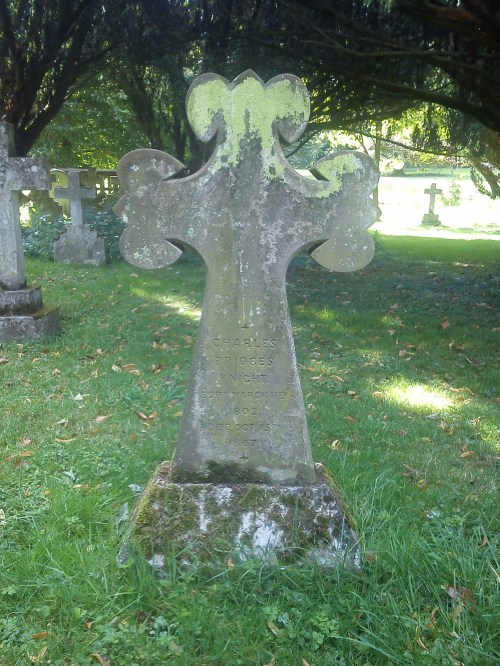
Charles Knight’s grave – St. Nicholas Churchyard in Chawton
Stay tuned for more references of Charles Bridges Austen’s reading habits. I do think it worth noting that along with his interest in the Church and its laws and traditions, he obviously has a love of travel and adventure – a shame he never came to America to explore on his own.
And thank you Hazel for sending all these diary entries to me and to Peter Sabor with help identifying some of the books.
 Hazel Jones is the author of Jane Austen & Marriage (Bloomsbury Continuum 2009, Uppercross Press 2017), Celebrating Pride & Prejudice (co-authored with Maggie Lane, Lansdown 2012), Jane Austen’s Journeys (Hale 2014) and is currently writing a book on Jane Austen’s Knight nephews. She was a tutor in the Department of Lifelong Learning at Exeter University until 2005 and continues to teach residential courses on aspects of Jane Austen’s writing, life and times. She is the membership secretary and a co-founder of the UK Jane Austen Society, South West Branch.
**Winchester College, a boarding school for boys founded in 1382, had 70 scholars and 16 “Quiristers” (choristers). The statutes provided for ten “noble Commoners,” paying guests of the Headmaster, and later had up to 130 such boarders [Wikipedia].
Sources:
1. Austen, Jane. Jane Austen’s Letters. 4th ed. Ed. Deirdre Le Faye. Oxford, 2011.
2. Find a Grave (information by Brodnax Moore): https://www.findagrave.com/memorial/108100107/charles-bridges-knight
3. Reading with Austen website: http://www.readingwithausten.com/index.html


 Willughby, Francis. The Ornithology of Francis Willughby of Middleton in the County of Warwick Esq; Fellow of the Royal Society. In Three Books. Wherein All the Birds Hitherto Known, Being reduced into a Method sutable [sic] to their Natures, are accurately described. The Descriptions illustrated by most Elegant Figures, nearly resembling the live Birds, Engraven in LCCVIII Copper Plates. Translated into English, and enlarged with many Additions throughout the whole Work: To which are added, Three Considerable Discourses, I. Of the Art of Fowling: With a Description of several Nets in two large Copper Plates. II. Of the Ordering of Singing Birds. III. Of Falconry. By John Ray, Fellow of the Royal Society. [Epigraph on title page]. London: Printed by A.C. for John Martyn, Printer to the Royal Society, at the Bell in St. Pauls Church-Yard, 1678.




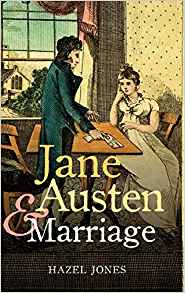 *Hazel Jones is the author of Jane Austen & Marriage (Bloomsbury Continuum 2009, Uppercross Press 2017), Celebrating Pride & Prejudice (co-authored with Maggie Lane, Lansdown 2012), Jane Austen’s Journeys (Hale 2014) and is currently writing a book on Jane Austen’s Knight nephews. She was a tutor in the Department of Lifelong Learning at Exeter University until 2005 and continues to teach residential courses on aspects of Jane Austen’s writing, life and times. She is the membership secretary and a co-founder of the UK Jane Austen Society, South West Branch.


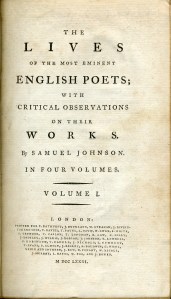 and R. and J. Dodsley, 1756. 3rd ed. 4 vols.

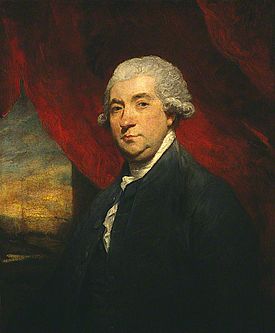

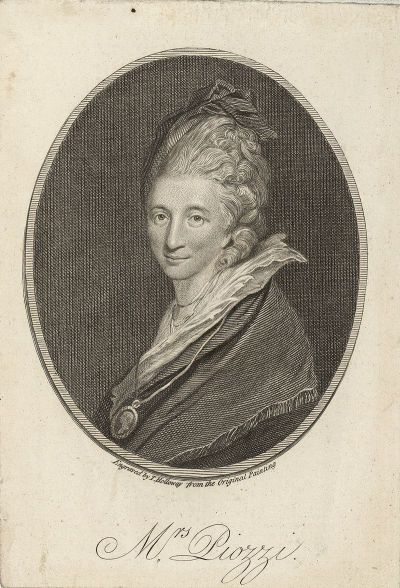
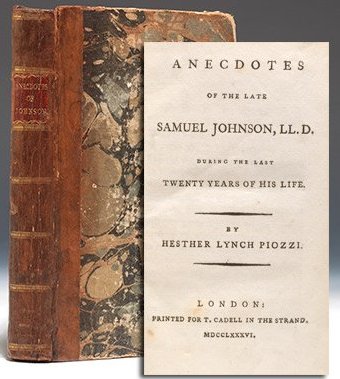 Hesther [sic] Lynch Piozzi. London: Printed for T. Cadell in the Strand, 1786. 1st ed.
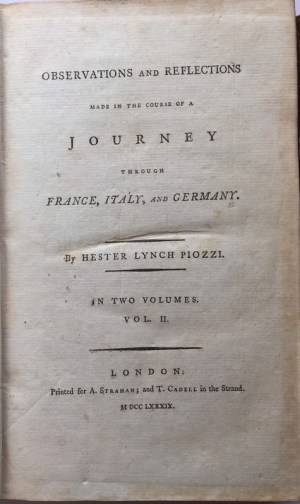 3
3