GLOSS adventures have been few and far between, as have been these blog posts, but now trying to catch up with information on three interesting finds – two purchased late last year on Canterbury with your generous support, and one a Lost Sheep miraculously found in the Knight Collection!
Will first start with the Lost Sheep found in the Knight Collection:
The Reading with Austen site lists this book:
Title: A Short Introduction of Grammar Compiled and set forth for the bringing up of all those that intend to attain to the knowledge of the Latin Tongue.
Author: Lily, William (ca. 1468-1522/3)
Date Published: 1753
Publisher: Printed by S. Buckley & T. Longman, Printers to the King’s most Excellent Majesty, in Latin, Greek and Hebrew
Place Published: London
Edition: 1st ed.
Location: East Case: column 5, shelf 5
Format: 12mo
***********
It is a Lost Sheep, but project notes say it is extant in the Knight Collection. So in looking at the list of titles in the KC, I find a “Ward’s Latin Grammar” and a location – the ever-vigilant Martin found the book and his photos show that indeed, this IS the Lily Grammar.
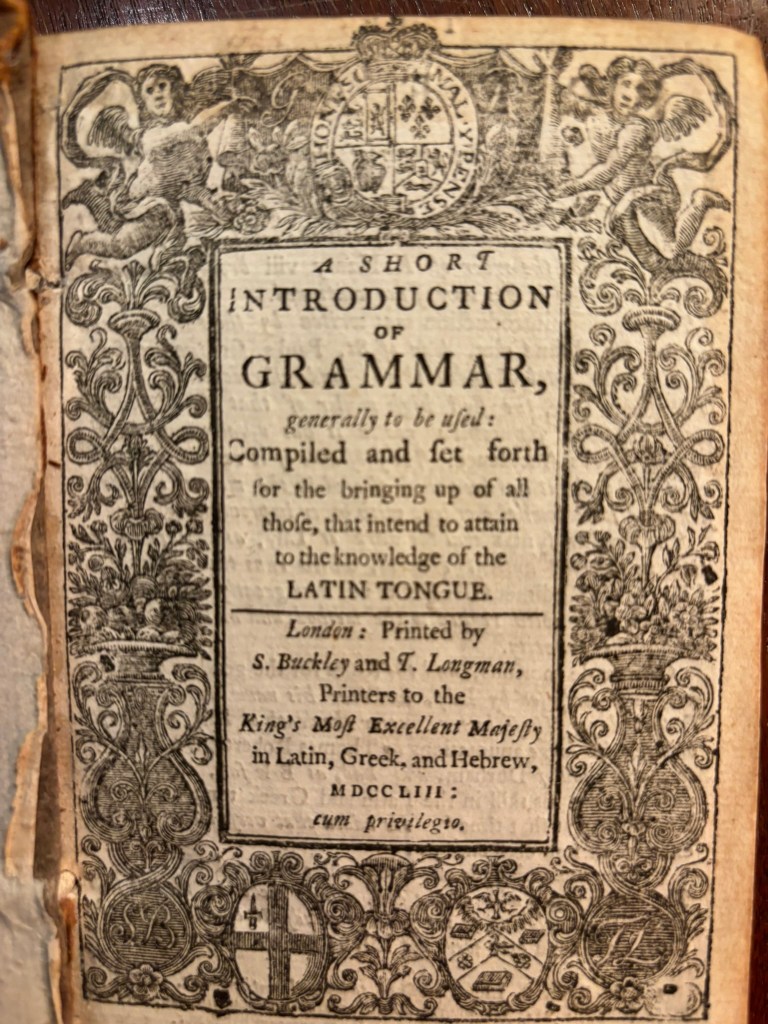
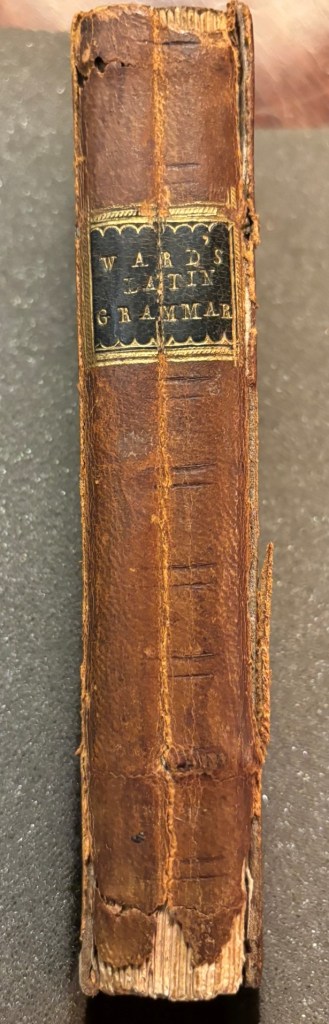
Its wild publishing history explains it all: Lily’s Grammar was first published around 1540 and was actually a combined version of two shorter Latin syntaxes that William Lily had written some years before. It became the standard text for studying Latin. It was revised in 1732 by John Ward with the title A Short Introduction of Grammar, Generally to be Used… Latin Tongue, but was still universally called “Lily’s Grammar” [Lily would be pleased] – hence the error in the RwA cataloguing and not located because of the spine reading “Ward’s Grammar.”
So a Lost Sheep found – and the easiest way possible – right on the shelves at Chawton House!
**************
So now on to Canterbury:
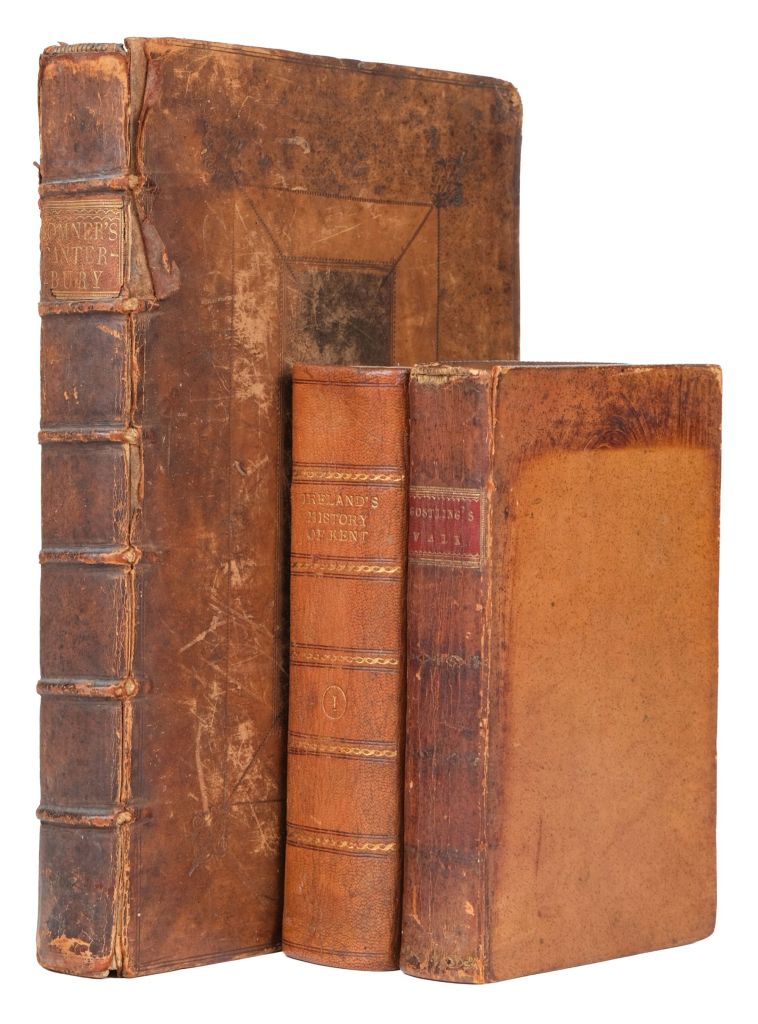
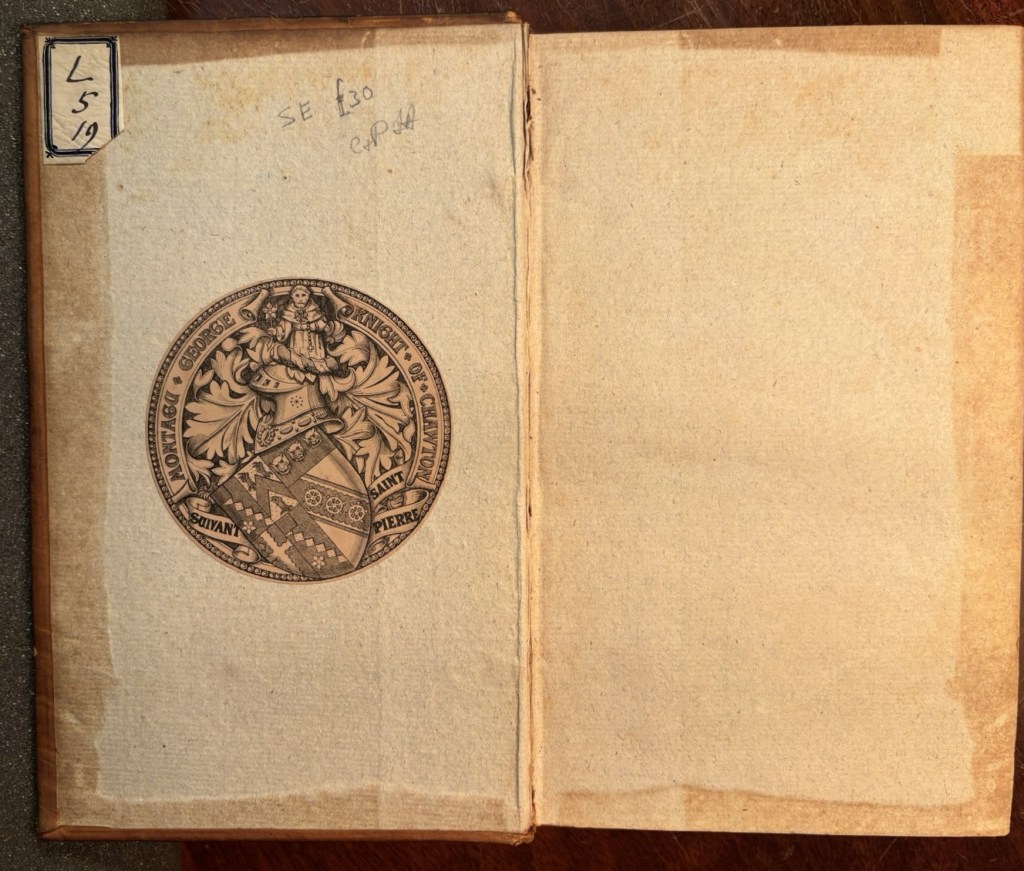
These two items were in the Dominic Winter auction on December 10, 2025 – there was a third title in the lot not of interest to us, but these two were Lost Sheep, with the all-important MGK bookplate:
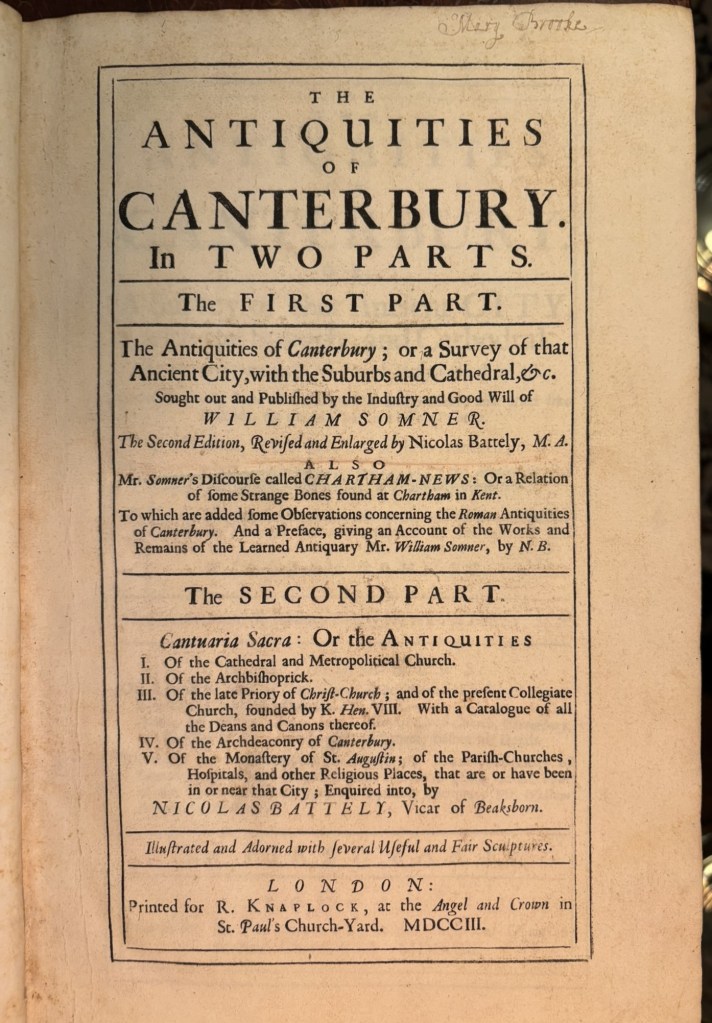
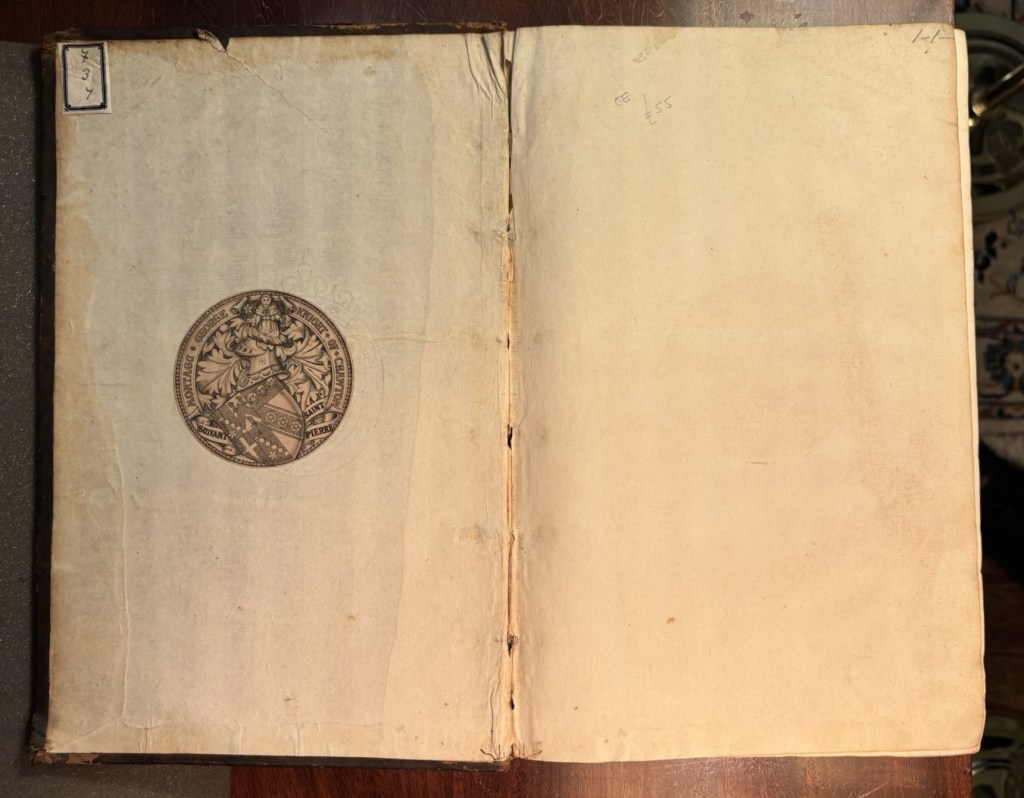
Somner (William & Battely, Nicolas). The Antiquities of Canterbury, 2 parts in one, 2nd edition, revised and enlarged, London: R. Knaplock, 1703, engraved frontispiece by Kip, letterpress title with near contemporary ownership signature, additional ownership signature to the verso of the first front blank, additional titles, 13 engraved plates, 6 maps, city and ground plans by Kip, Hollar, Hill, etc., errata leaf present at rear, minor staining, upper hinge weak, some staining to rear endpapers, circular bookplate of Montagu George, Knight of Cawton to front pastedown, contemporary panelled calf, spine with morocco gilt label, boards and spine, rubbed and worn, folio,
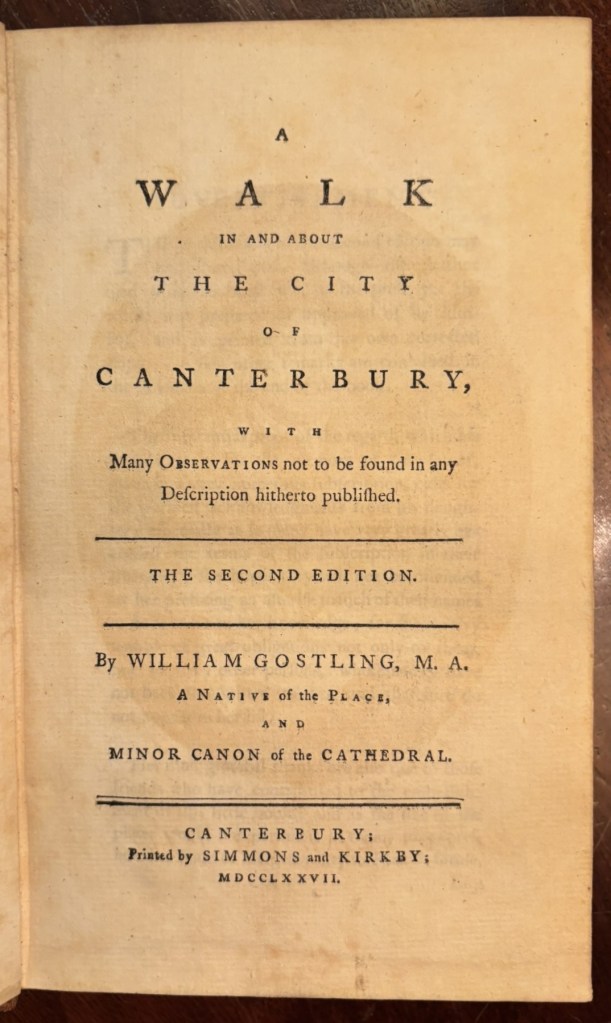
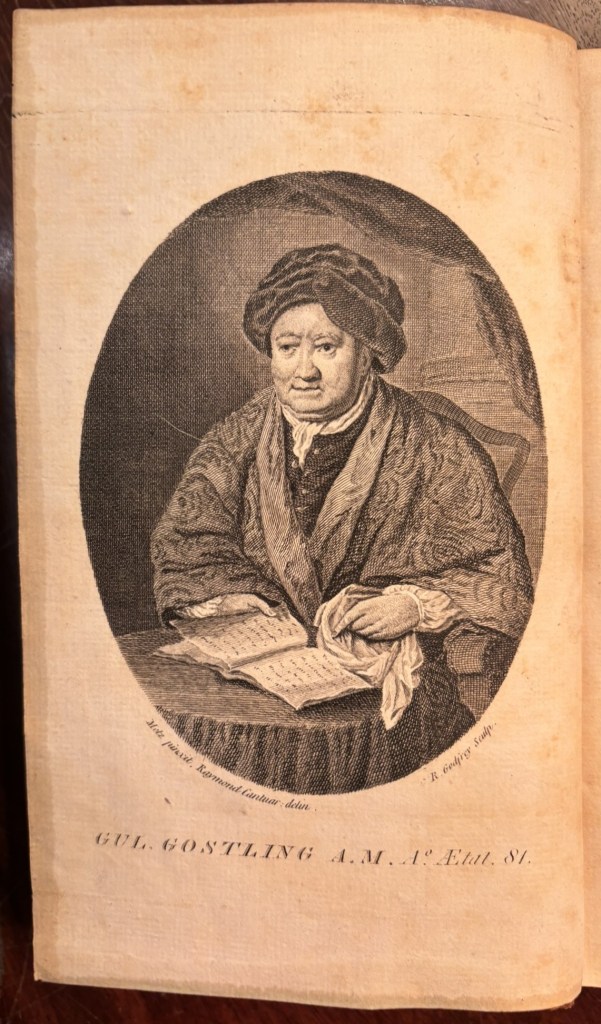
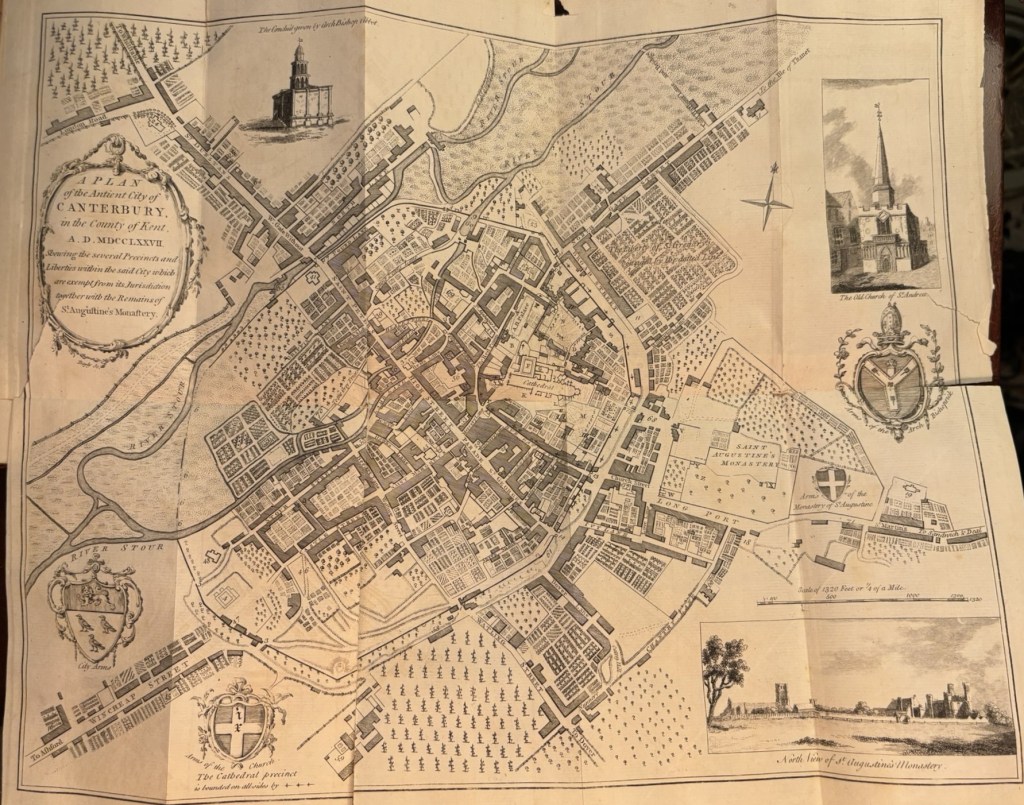
Gostling (William). A Walk in and about the City of Canterbury…, 2nd edition, Canterbury: printed by Simmons & Kirkby, 1777, portrait frontispiece, 23 engraved plates (including 2 folding), 1 table and 1 folding map, circular bookplate of Montagu George, Knight of Cawton to front pastedown, contemporary speckled calf, upper board light stained, slight wear to extremities, 8vo.
***********
Notice the cataloguing error: “Montagu George, Knight of Cawton” – ignoring the Chawton misspelling, this “Knight of Chawton” is a common error, even in the library cataloguing of various institutions – amuses me that Montagu would be amused, his intention in that bookplate design was for it to be read exactly that way, a “Knight” indeed…
Both these titles are listed in the Godmersham catalogue, and dispersed long ago, and now safely back at Chawton House.
1. Somner (William & Battely, Nicolas). The Antiquities of Canterbury, 1703.
First published in 1640, this work was one of the earliest local histories written in England and considered a landmark achievement in early English urban historiography. Somner, who later became the first compiler of an Anglo-Saxon dictionary, wrote of Canterbury’s ecclesiastical significance, architectural treasures, and civic development through carefully researched accounts drawn from original manuscripts, charters, and personal observations. [from: Rooke Books, Bath, UK on Abebooks]
You can read more than you ever thought you needed to know here at the Kent Archaeological Society’s [KAS] website:
The 2nd edition of 1703, the one at Godmersham, was published after Somner’s death in 1669 and incorporates corrections made by Somner in an extant proof copy and was further ‘revised and enlarged’, as well as reorganized, by Nicholas Battely, vicar of Bekesbourne [from the KAS]. The book is as much a history of Canterbury as a tribute to its cathedral.
A few images [with thanks again to Martin at Chawton House!]
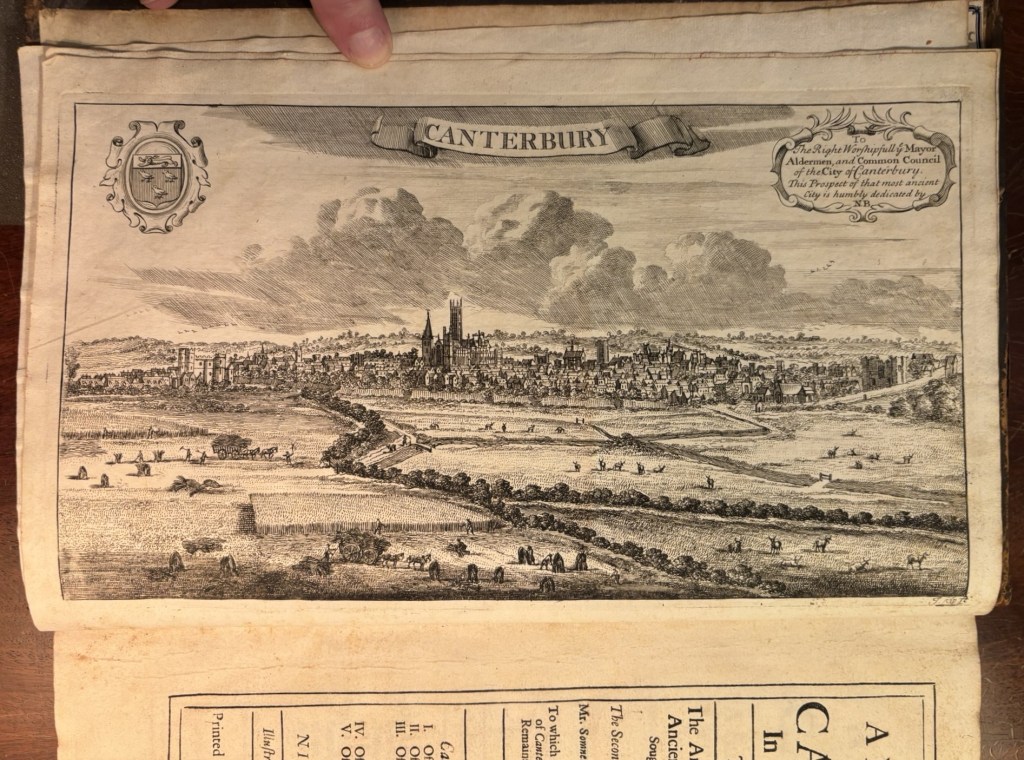
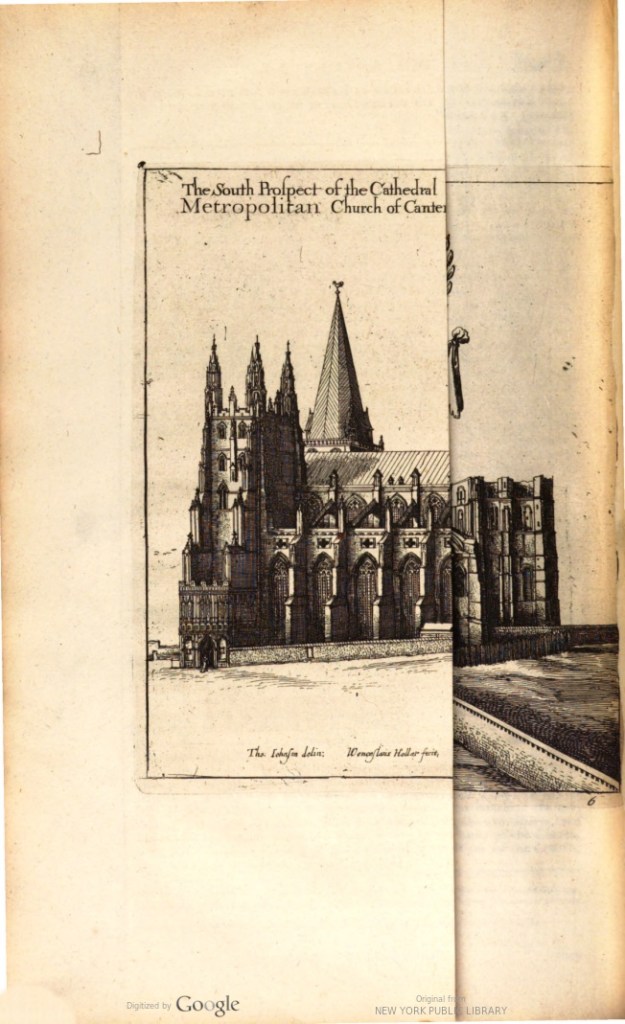
–
You can read the entire book here: at HathiTrust from the NYPL
***********************
2. Gostling, William. A Walk in and about the City of Canterbury. 1777.
This is a lively tourist guide, filled with history and Gostling’s observations from years of study and offering tours around the city. You can read about William Gostling here – long suffering from gout, apparently the book was written while he was mostly confined to bed. I am amused to find that he affectionately called his wife, who bore him nine children, “his dragon” [one must become a dragon with nine children].
This 2nd edition was published after his death in 1777, and the “advertisement” is penned by his daughter.
More information also at the KAS website: [though the article does not open for me…]
The full text at Google Books.
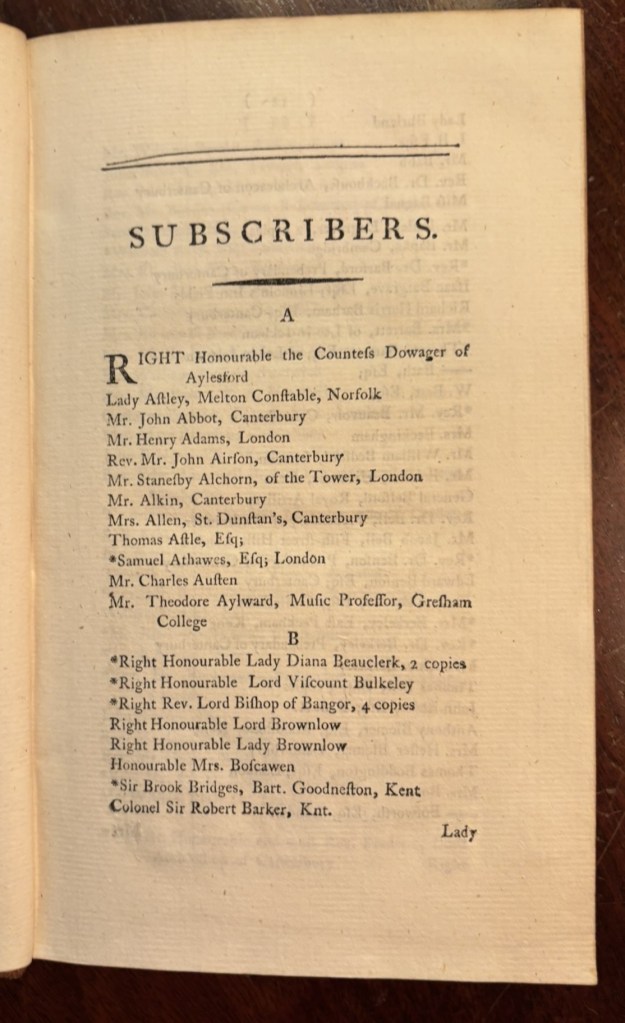
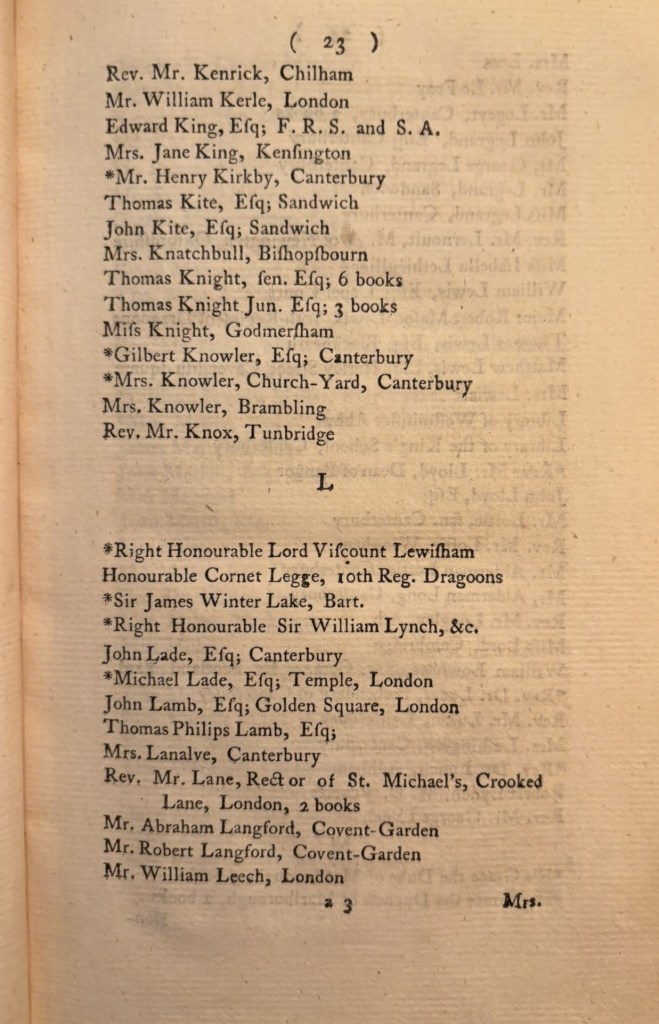
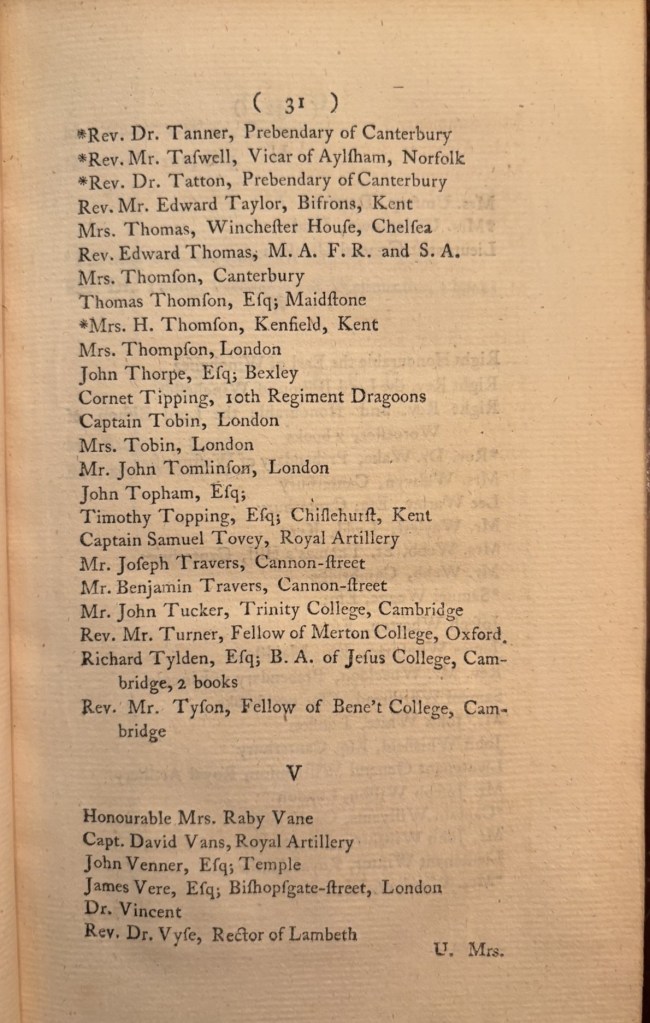
There are 21 pages of Subscribers, always an interesting study of author supporters and the book collectors of the time. Here are a few of them showing: Mr Charles Austen [who might he be? Too early for Austen’s brother]; Sir Brook Bridges of Goodnestone [Elizabeth Bridges’ father]; Mrs. Knatchbull; Thomas Knight (6 Books), Thomas Knight Jun (3 books), and Miss Knight of Godmersham [and why there are two books in the Godmersham catalogue]; and a very interesting “John Thorpe, Esq, Bexley.”
***************
Did Jane Austen peruse these books when visiting Godmersham?
She mentions Canterbury numerous times in her letters, either about visiting there while staying at Godmersham, or in response to Cassandra’s letters about what she was doing in Canterbury: [Letter citations are to Le Faye, 4th ed.]
– Shopping: “I am still without silk. You must get me some in town or Canterbury” [Ltr 18];
– Jesting Cassandra about a proposal from James Digweed: “I suppose he went to see the Cathedral, that he might know how he should like to be married in it” [Ltr 32];
– Visiting: Jane visits Mrs. Knight who lives in White Friars [Mrs. Knight was Catherine Knight, Edward’s adoptive mother] – Jane was close to Mrs. Knight who took an interest in her writing. Austen writes of a visit:
“Mrs. Knight was alone in her Drawing room, as gentle and kind and friendly as usual.” [Ltr 53]
– She writes of being entertained at Chilham Castle, near Godmersham and Canterbury: “I must leave off being young…for I am put upon the Sofa near the Fire & can drink as much wine as I like.” [Ltr 96]
– Austen also visits the Canterbury Gaol*:
“[Edward] went to inspect the Gaol, as a visiting magistrate, & took me with him. – I was gratified – and went through all the feelings which People must go through I think in visiting such a Building. – We paid no other visits – only walked around snugly together & shopp’d.” [Ltr 95].
How we wish she had written more of what she saw and felt!
[* The Gaol that Edward and Jane visited was built in 1806-08 to replace the former facility, so it would not have been in either of these Canterbury guides.]
– She makes one unflattering mention of Canterbury in Jan 1807 [Ltr 49], when she writes about Mrs. Knight wanting to have Cassandra near her at all times: “If that should be the case, we must remove to Canterbury which I should not like so well as Southampton.”
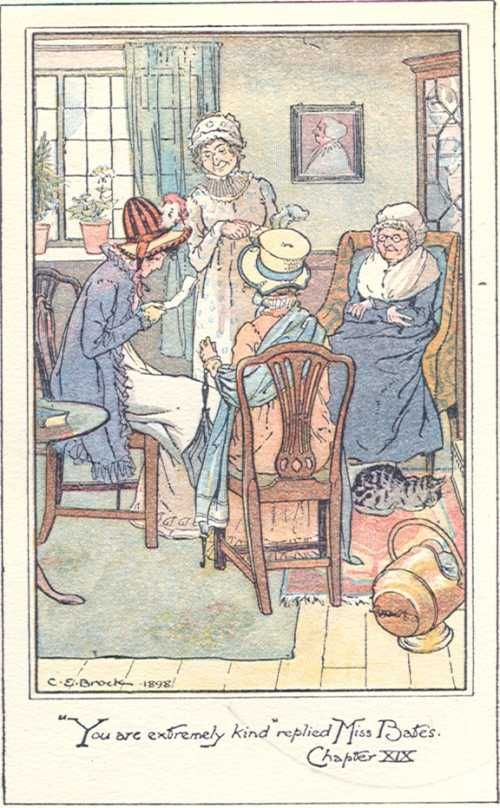
– She also visits with Mrs. Charles Milles and her daughter Molly, who according to Jocelyn Harris, were the inspiration for Mrs. and Miss Bates in Emma [see Jocelyn Harris, “Jane Austen and the Subscription List to Camilla (1796).” Persuasions OnLine 35.1 (2014)]:
“Our cheif Business was to call on Mrs Milles, & we had indeed so little else to do that we were obliged to saunter about anywhere & go backwards & forwards as much as possible to make out the Time & keep ourselves from having two hours to sit with the good Lady. . . . Miss Milles was queer as usual & provided us with plenty to laugh at. She undertook in three words to give us the history of Mrs Scudamore’s reconciliation, & then talked on about it for half an hour, using such odd expressions & so foolishly minute that I could hardly keep my countenance.” [Ltr 94]
************
I had Jane Austen in my thoughts when I was wandering the streets of Canterbury last May while on the JASNA tour, and though I had neither of these travel guides in hand, I did do the various things I am sure Jane did while there herself on various occasions.
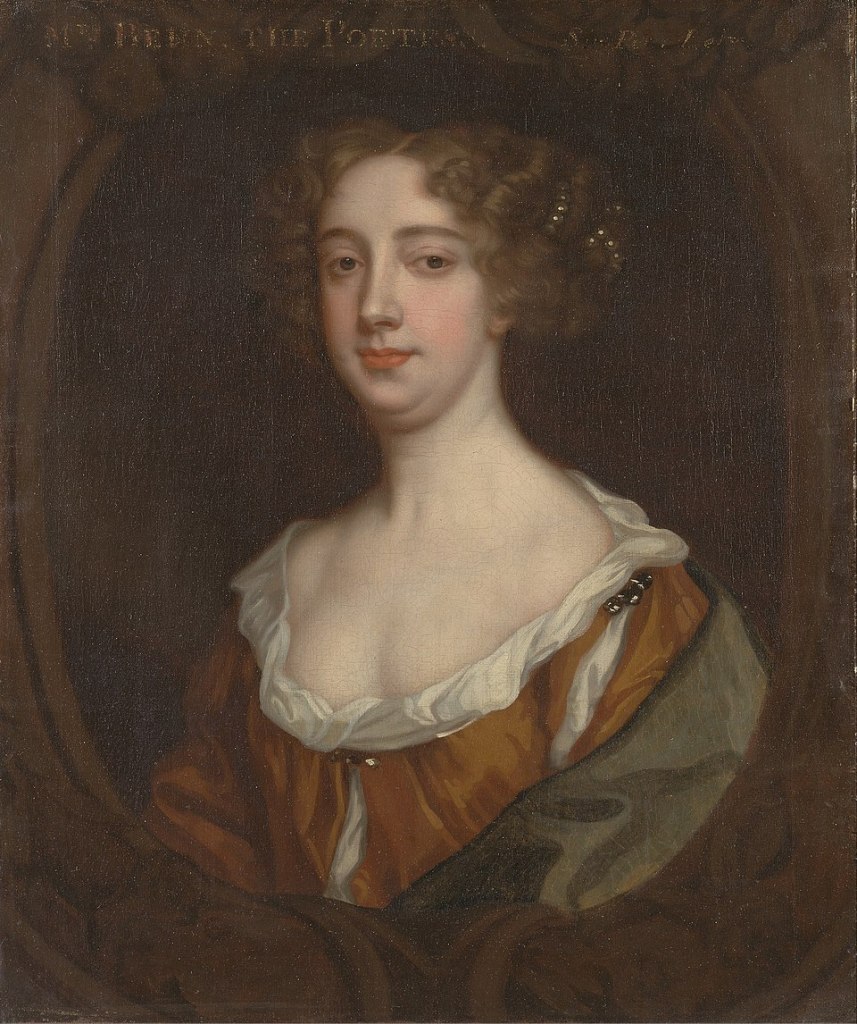
One of the main draws for me was to see the newly unveiled statue of Aphra Behn, dedicated by Queen Camilla in February 2025. This is such a tribute to Behn, right here on the main street of Canterbury, she finally getting her just due. See here for an explanation of all the features of the statue – and more here at Fine Books & Collections.
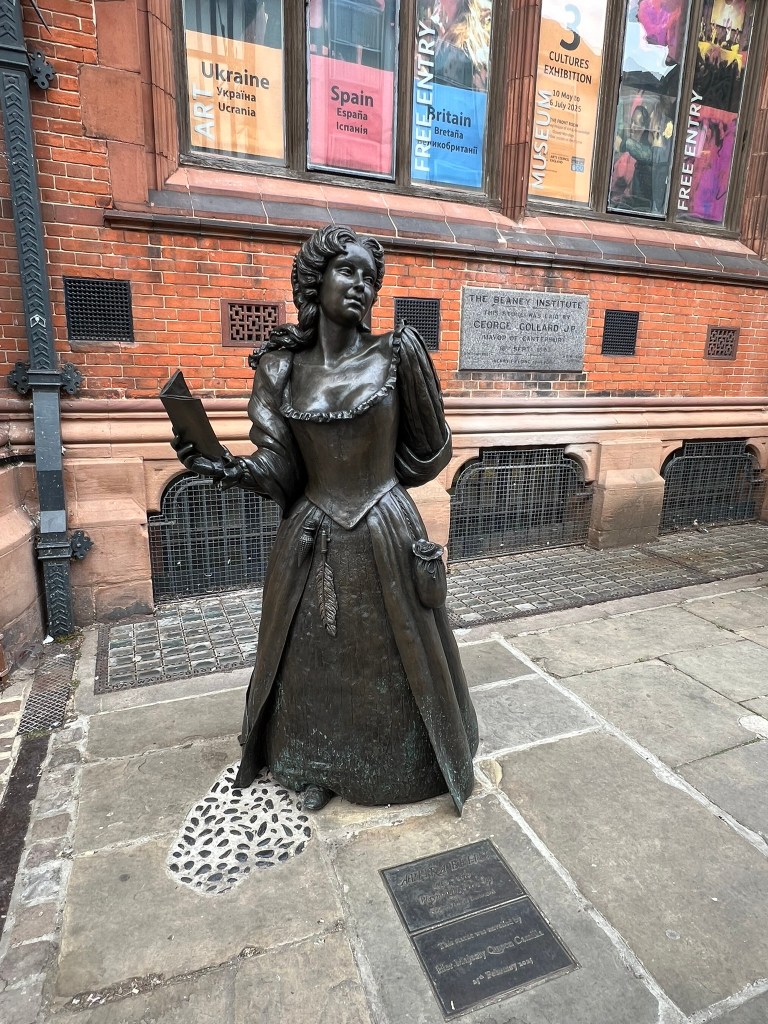
I especially liked her foot revealed from under the back of her dress…
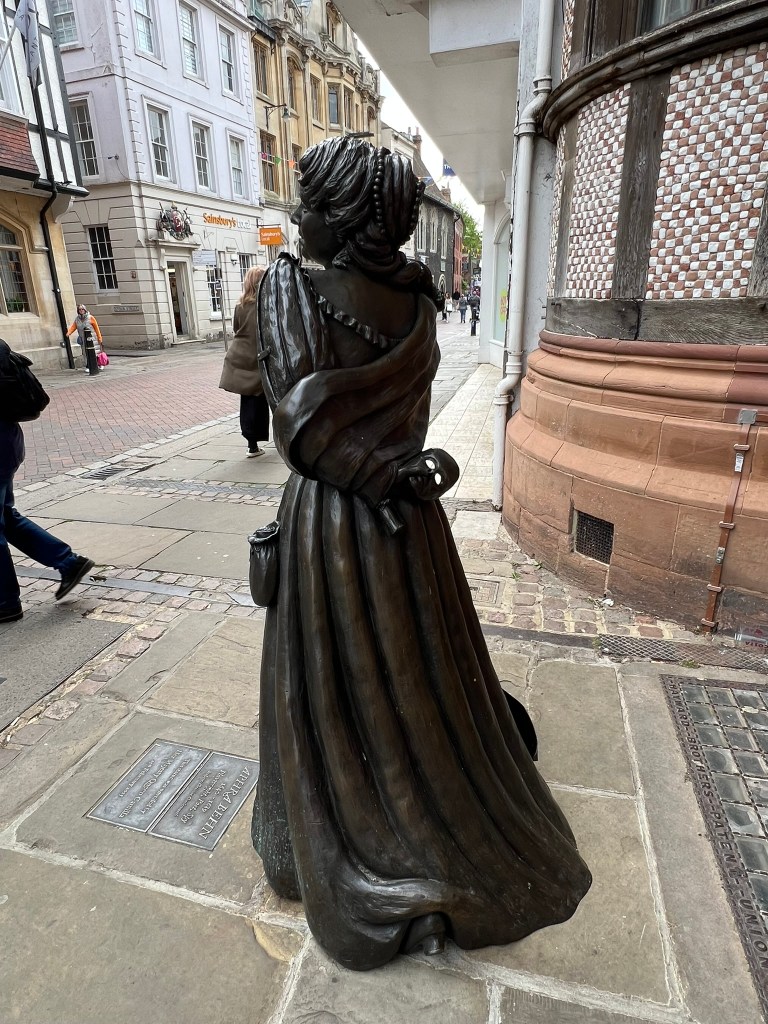
The statue is right outside the Beaney House of Art & Knowledge.
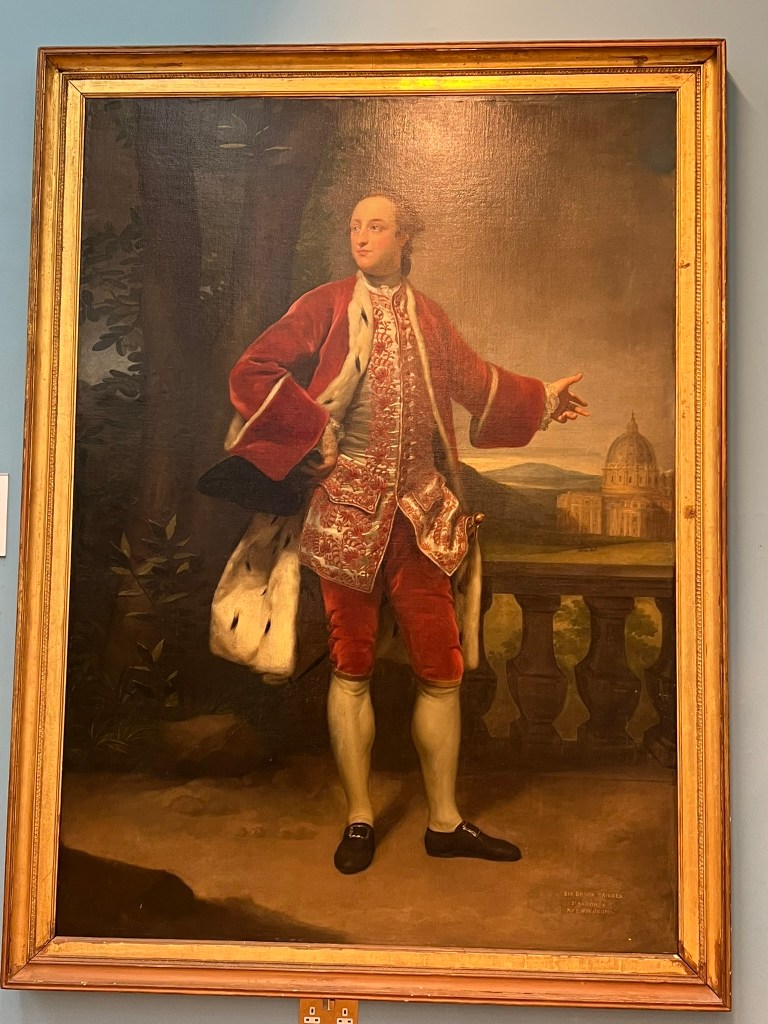
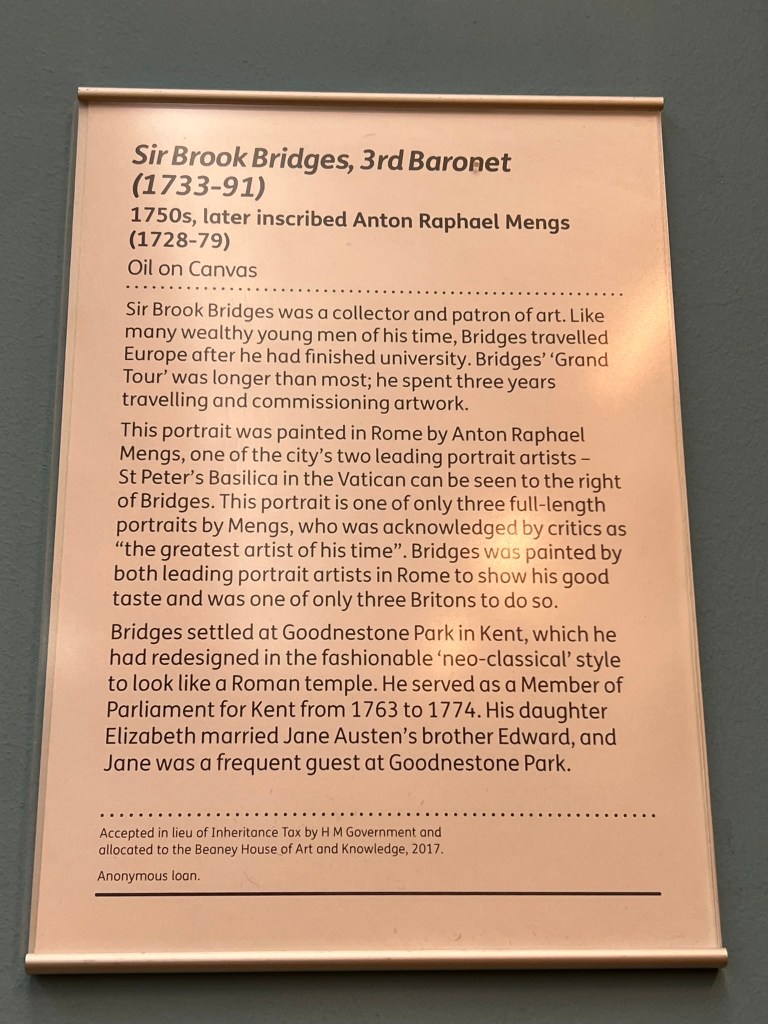
Inside is the portrait of the scandalous father of Elizabeth Bridges, Sir Brook Bridges (1733-91) – I leave it to you to read about the scandal – I leave such gossip to other tongues…
Our walk around Canterbury found us in delightful conversation with a gentleman who asked where we were from: my friend Joy says “California” – “You must be a hippie” he says. “I am in South Carolina but from Vermont,” I say – and he goes into rhapsodies about Bernie Sanders! [Bernie’s brother has long lived in England and has served in the Labour Party, and this fellow apparently knows him] – we then went on to discuss American politics, which again I shall leave for other tongues…certainly “an easy step to silence”…
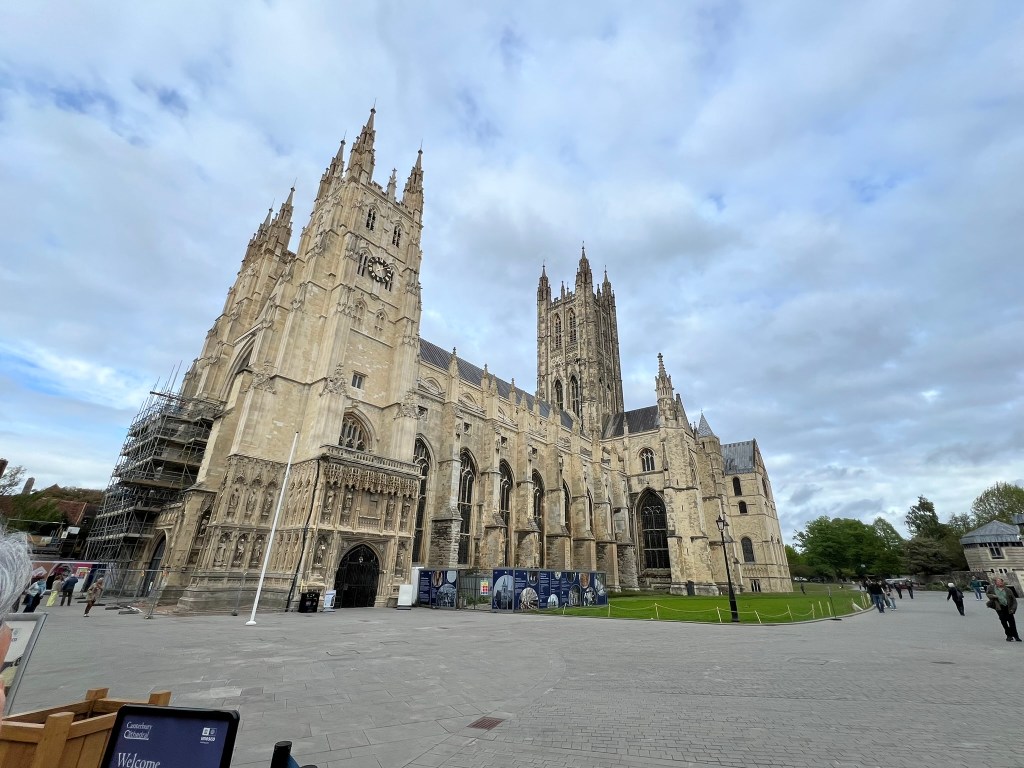
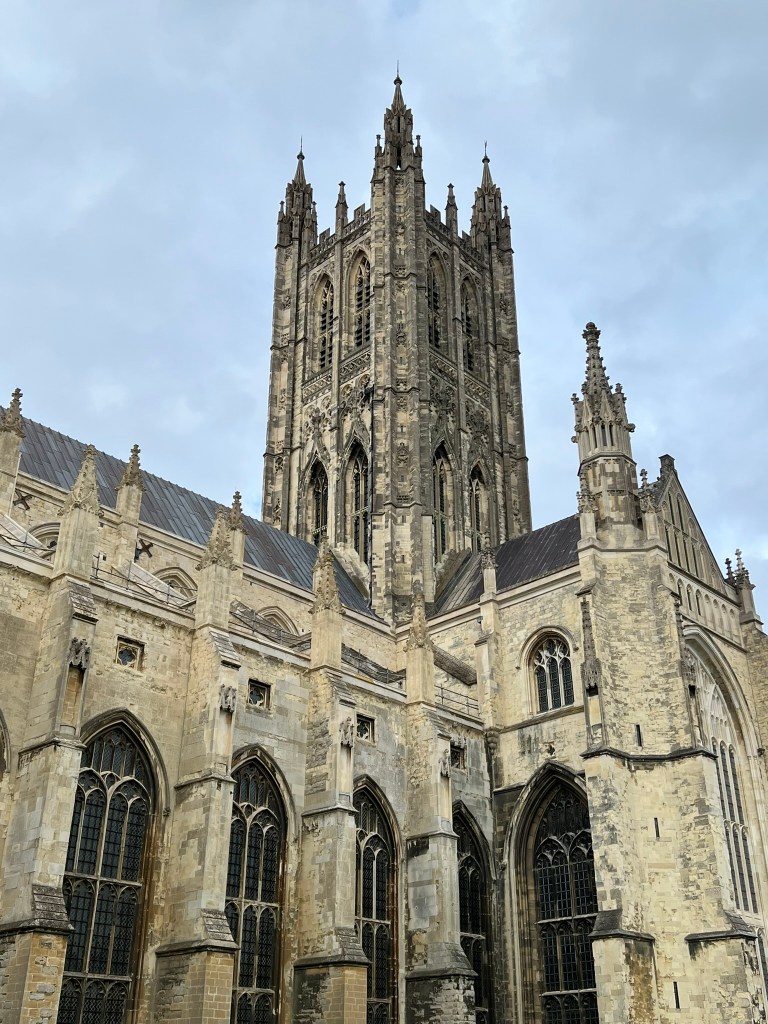
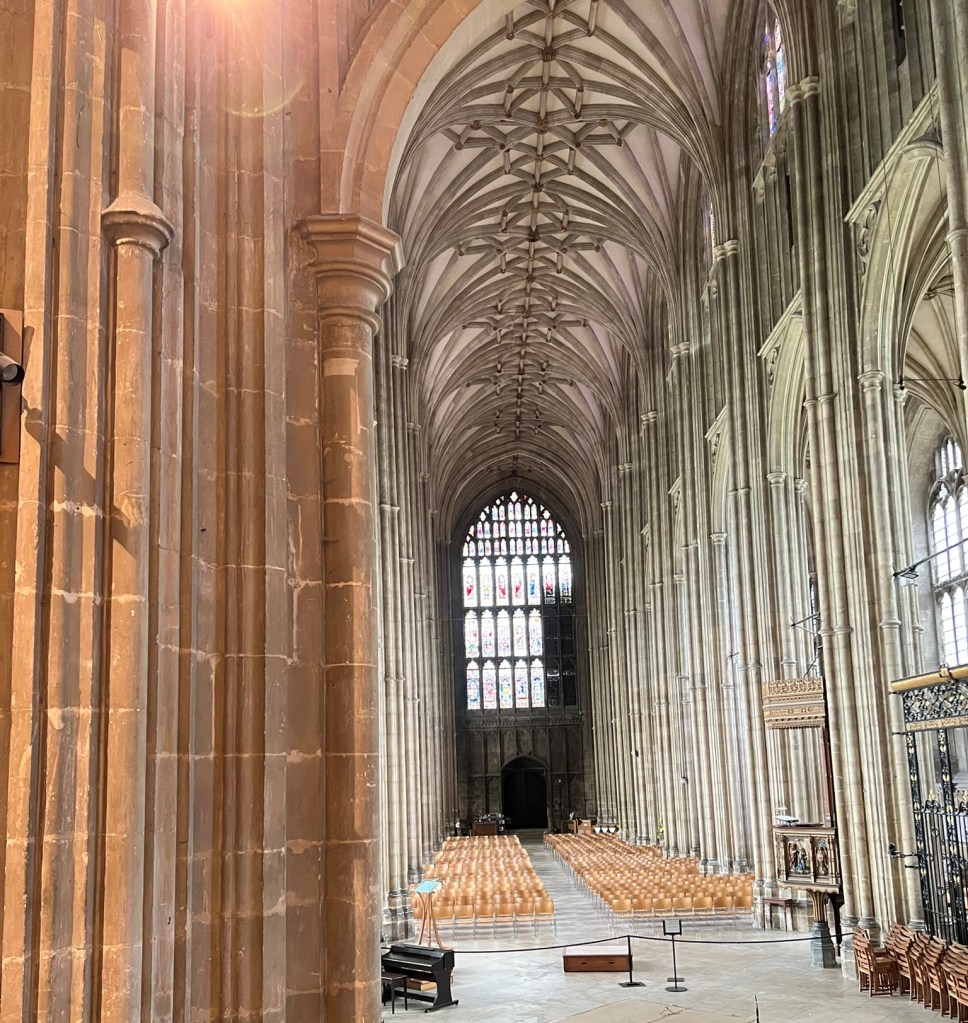
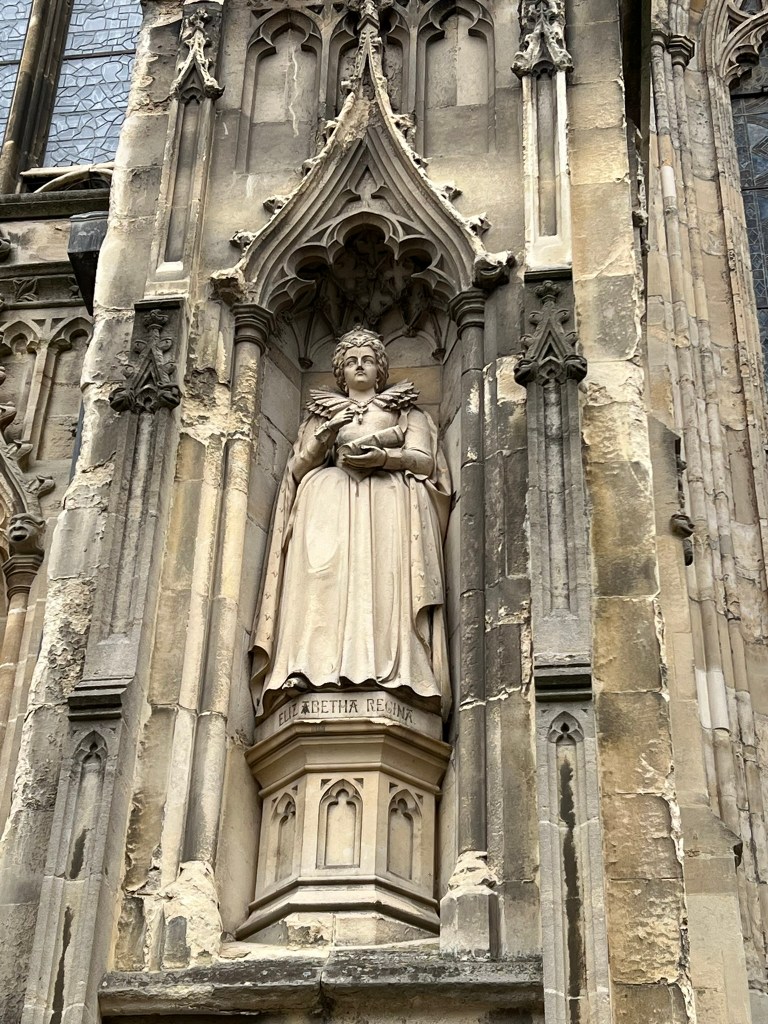
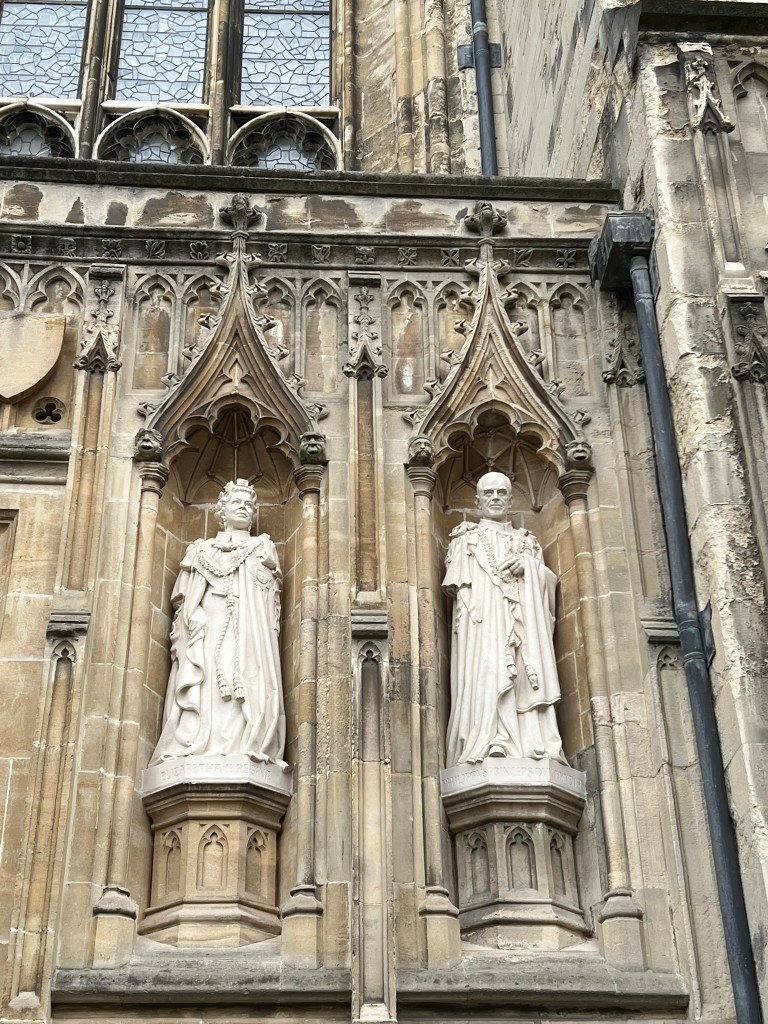
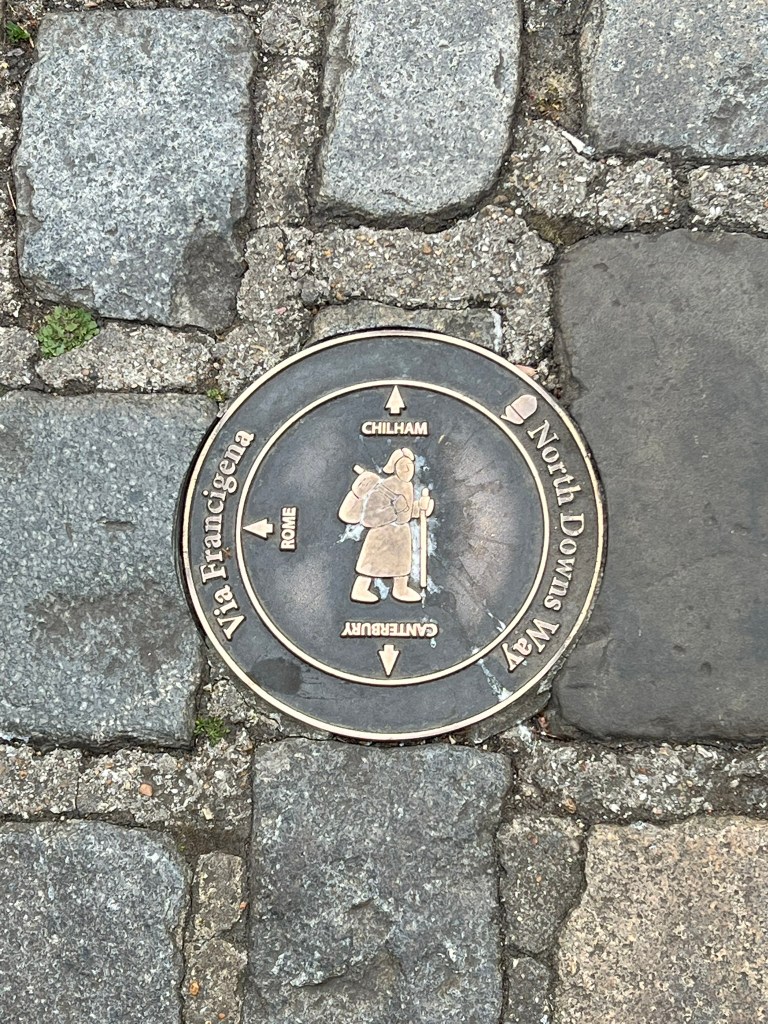
It was an enlightening discussion with “Larry’s friend,” but we were off to Evensong – which was beautiful, as always, – reserved seats just for JASNA, and though we were unable to take photos during the service, I captured a few on the way out…and the exterior [much restoration work going on covering up the main entrance]:
*************
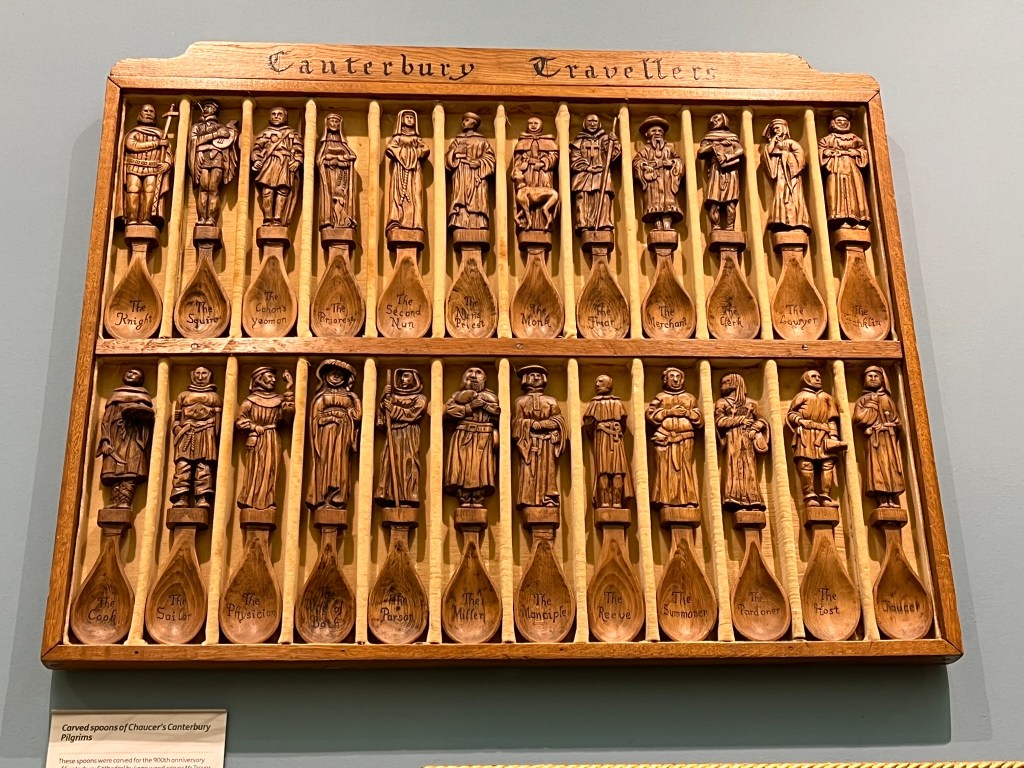
I did love this from the Beaney Museum, feeling much like a “Canterbury Traveller” as I am sure did Jane:
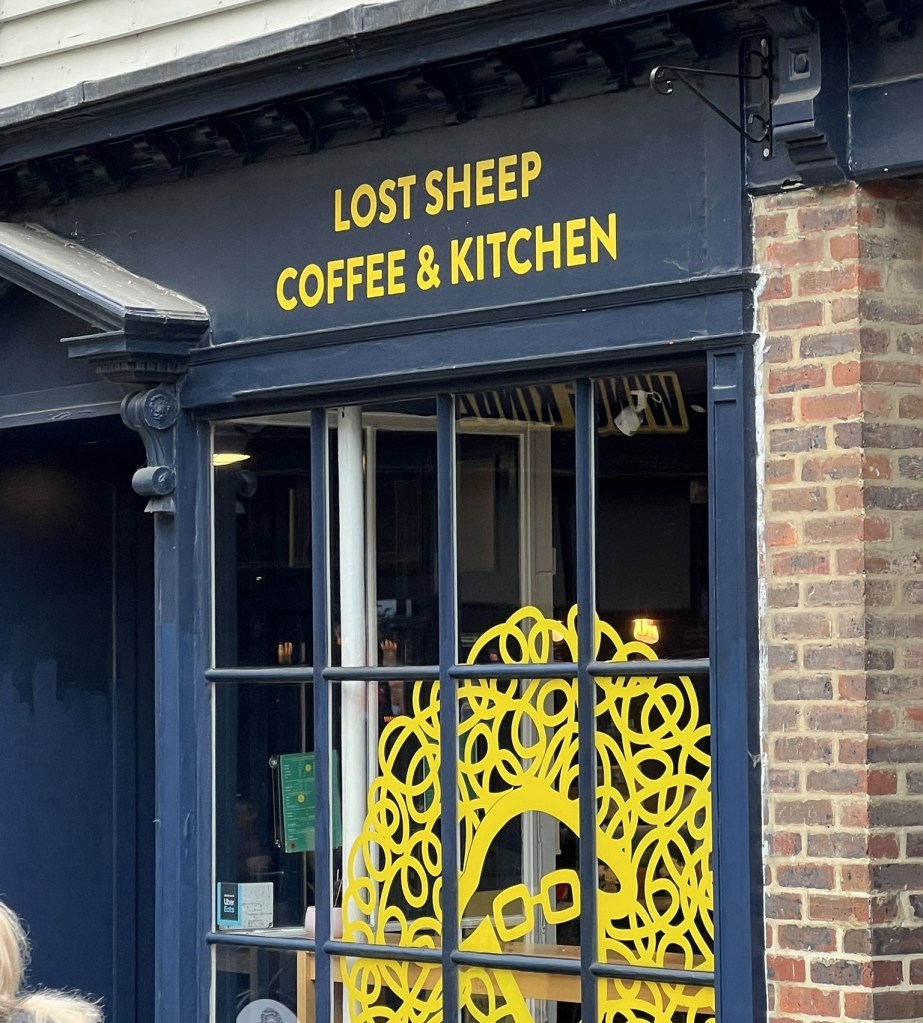
And this absolute fortuitous find on the streets of Canterbury – I mean, they must know all about us!
*****************
So a job well-done GLOSSians! Two more books back into the fold – and maybe two that Jane Austen read through during her days at Godmerhsam and carriage rides to Canterbury. There are more GPL books out there, so be on the look-out with your eagle eyes and let me know if you hear of anything…

